
Subfloor Repair & Leveling Services in Rockford, IL
Expert Subfloor Solutions for Lasting, Beautiful Floors
A solid, level subfloor is the foundation of every great flooring installation. At Ramos Wood Floors LLC, we specialize in subfloor repair and leveling for homeowners throughout Rockford, Loves Park, Machesney Park, and surrounding communities. Whether you’re dealing with squeaky floors, soft spots, or uneven surfaces, our experienced team delivers lasting solutions so your new flooring looks and performs its best.
What Is Subfloor Repair & Leveling?
Your subfloor is the structural layer beneath your finished flooring—typically made of plywood, OSB, or concrete. Over time, subfloors can develop problems that affect the look, feel, and longevity of your floors. Subfloor repair addresses damage, rot, and structural issues, while leveling ensures a flat, stable surface for new flooring installation.
Signs Your Subfloor Needs Repair
Many homeowners don’t realize their subfloor is the root of flooring issues until problems become obvious. Watch for these symptoms: – Floors that bounce, flex, or feel soft when walked on – Noticeable movement or shifting beneath your feet – Gaps between flooring planks, or planks that separate over time – Popping or squeaking noises, especially in certain spots – Doors that rub, stick, or suddenly won’t close properly – Uneven or sloping floors – Cracks in tile or grout lines – Persistent musty odors (can indicate hidden moisture) If you notice any of these, it’s time to have your subfloor checked by a professional.
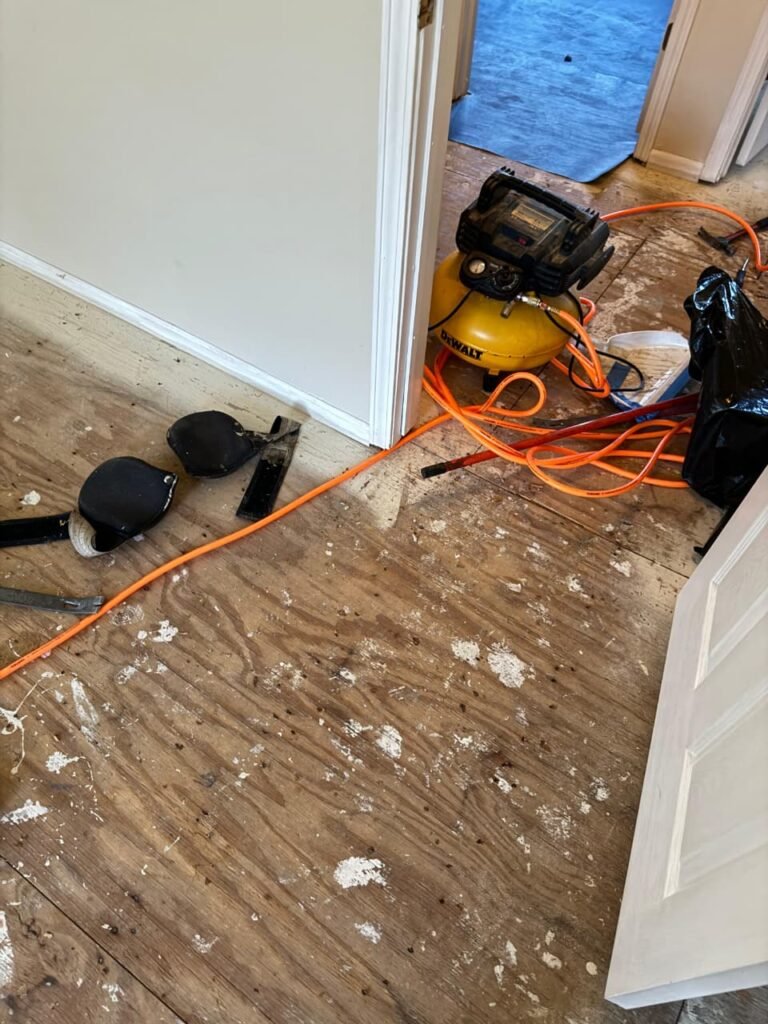
Common Subfloor Problems We Fix
How We Check Flatness
Proper prep starts with a thorough assessment: – Straightedge/Level: We use long straightedges and levels to detect dips, high spots, and uneven transitions. – Measuring Dips/High Spots: We map out the floor to find areas outside industry tolerances (usually >3/16” over 10 feet). – Identifying Joist Issues: We check for joist movement, rot, or warping that could affect the subfloor. – Moisture Checks: We use meters to detect hidden moisture that could cause future problems. This careful prep ensures we address every issue before installing new flooring.
Signs Your Subfloor Needs Repair
- Settling: Natural house settling shifts the structure, causing unevenness.
- Moisture: Water intrusion, plumbing leaks, or humidity damage wood and concrete.
- Poor Installation: Improperly secured panels or inadequate fasteners lead to movement and squeaks.
- Damaged Joists or Panels: Age, pests, or water can weaken supporting joists and subfloor materials.
Subfloor Types We Work On
We repair and level all common subfloor types: – Plywood: Most common in modern homes. We check for delamination, rot, and loose panels. Repairs include replacement, re-fastening, or leveling as needed. – OSB (Oriented Strand Board): Similar to plywood but more sensitive to moisture. We address swelling, edge damage, and ensure secure attachment. – Concrete: Typical for basements and some main floors. We fix cracks, fill low spots, and use self-leveling compounds for a perfectly flat base. Each material requires a unique approach—our team has the tools and experience to address all types.
Our Subfloor Repair & Leveling Process
Leveling Methods Explained
We use several methods based on your home’s needs: – Self-Leveling Compound: Ideal for concrete or minor dips in wood subfloors. Pours on smoothly, dries flat. – Shimming: For minor corrections, we add shims under panels to eliminate movement or gaps. – Sanding High Spots: We sand down raised areas in wood subfloors for a flush finish. – Panel Replacement: Severely damaged or uneven sections are cut out and replaced. Our team recommends the best method after a full inspection.
Why Skipping Leveling Causes Failures
Ignoring subfloor issues can lead to: – LVP Joint Separation: Vinyl plank flooring (see our Vinyl Plank Installation) requires a flat base—unevenness causes joints to separate and creates hollow spots. – Squeaks & Movement: Unfixed panels or uneven spots lead to ongoing squeaks and shifting. – Cracks in Tile: Tile floors need a perfectly flat, rigid base or grout lines and tiles will crack. – Hardwood Problems: Gaps, cupping, and premature wear in hardwood floors (see our Hardwood Floor Installation). – Shortened Floor Life: Any floor installed over a poor subfloor will need replacement much sooner.
What to Expect During the Job
We know home projects can be disruptive—here’s what to expect: – Noise & Dust: Some noise from tools and possible dust, especially during sanding or demo. We use dust control methods and clean up daily. – Access: We’ll need clear access to the work area. Please remove furniture and belongings ahead of time. – Walkability: You may need to avoid the area for a day or two, especially if leveling compounds are drying. – Protecting Adjacent Areas: We use barriers and coverings to keep dust and debris out of other rooms. – Communication: Our crew will explain each step and answer questions as we go.
Why a Flat Subfloor Matters
A level subfloor is essential for: – Hardwood Flooring: Prevents gaps, cupping, and premature wear. Learn more about Hardwood Floor Installation – Laminate Flooring: Ensures click-lock joints stay secure. – Vinyl Plank Flooring: Avoids visible imperfections and improves durability. See our Vinyl Plank Installation service – Tile Flooring: Prevents cracking and uneven grout lines.
Timeline & Cost Factors
Project duration and cost depend on: – Size of the area – Extent of damage or unevenness – Type of subfloor material – Accessibility and prep work required Most subfloor repairs take 1–3 days. We provide free in-home estimates with transparent, upfront pricing.
How to Prepare for Your Project
- Clear furniture and belongings from the work area.
- Ensure access to the space for our team.
- Note any specific problem areas to discuss during inspection.
- Ask us about Hardwood Floor Refinishing or new flooring options after repairs are complete.
Our 2-Year Workmanship Guarantee
All subfloor repair and leveling work is backed by our 2-year workmanship guarantee. If any issues arise from our work, we’ll make it right.
Frequently Asked Questions
Can you fix squeaky floors without replacing the subfloor?
Yes, many squeaks can be fixed by re-securing panels and adding fasteners.
How flat does a subfloor need to be?
Industry standards require subfloors to be within 3/16” over 10 feet for most flooring types.
Do you repair water-damaged subfloors?
Absolutely. We remove and replace damaged sections and address moisture sources.
Can you level concrete subfloors?
Yes, we use self-leveling compounds to correct uneven concrete.
Will subfloor repair raise my floor height?
In most cases, the change is minimal and unnoticeable.
How long does subfloor leveling take?
Most projects are completed in 1–3 days depending on scope.
Can I refinish hardwood after subfloor repair?
Yes, we can refinish your hardwood floors after subfloor work is complete. See our Hardwood Floor Refinishing service
Do you work in older homes?
Yes, we have extensive experience with older homes in the Rockford area.
Do you offer free estimates?
Yes, all estimates are free with no obligation.
What’s included in your warranty?
Our 2-year guarantee covers all workmanship on subfloor repairs and leveling.
Do you need to remove the existing flooring first?
In most cases, yes. We’ll remove old flooring to access and repair the subfloor properly.
Can you level under cabinets or appliances?
We can often work around fixed items, but full leveling may require moving appliances or cabinets.
Will this permanently stop squeaks?
Our repairs are designed to eliminate squeaks, but some older homes may develop new ones over time.
How soon can new flooring be installed after leveling?
Usually within 24–48 hours, depending on the leveling method and drying time.
Service Areas
We proudly serve Rockford, Loves Park, Machesney Park, Belvidere, Roscoe, Rockton, and surrounding communities.
Ready to Fix Your Subfloor?
Contact Ramos Wood Floors LLC today for a free in-home estimate.