
Hardwood Floor Water Damage Guide: Moisture and Water Damage
Signs: cupping, crowning, buckling, dark stains. Steps: stop source, remove water, dry with fans and dehumidifier, test moisture, then assess repair. Never sand elevated-moisture floors. Maintain 35-55% humidity.
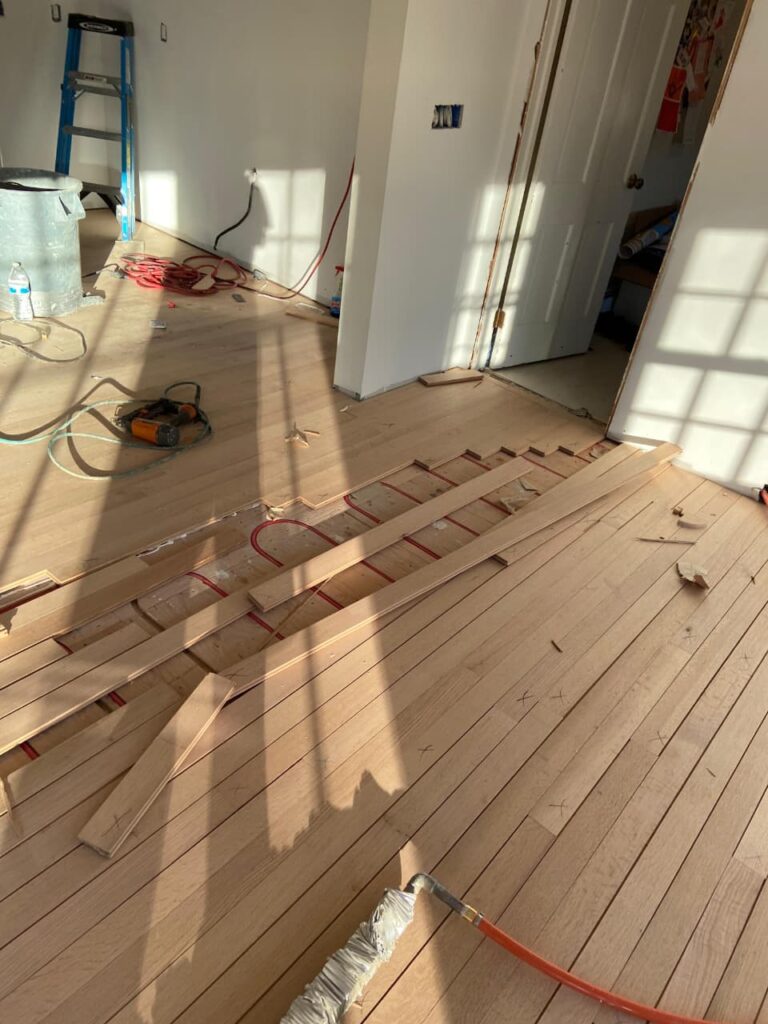
Recognizing Moisture Damage
This water damage guide helps you identify, address, and prevent moisture issues in hardwood floors.
The most common signs of water damage in hardwood are cupping (edges rising higher than the center), crowning (the center rising above the edges), buckling, and dark stains where water sat. If you notice any of these, address the moisture source immediately — the longer water sits, the more likely a simple repair becomes a full replacement.
Immediate Steps
First, stop the source of the water — a leak, spill, or humidity spike. Then remove any standing water and begin drying with fans and a dehumidifier right away. Do not sand a floor that still holds elevated moisture; sanding a wet floor locks the problem in and can ruin the boards permanently. Let the floor dry and stabilize first.
Testing Before Repair
Before any refinishing, we test the moisture content of the wood and subfloor. A floor must return to a normal, stable moisture range before sanding or finishing. If the boards have warped beyond recovery, those individual boards are replaced before the floor is sanded and refinished as a whole.
Repair vs. Replace
Minor cupping often flattens back as the floor dries and may only need screening and recoating. Severely cupped, buckled, or rotted boards must be replaced. The good news is that in most cases only the damaged section needs board replacement — the surrounding floor can often be refinished to blend everything together.
Prevention
Maintain indoor humidity between 35% and 55% year-round, clean up spills immediately, never use wet mops or steam mops, and place mats at exterior doors. Consistent humidity is the single most important factor in preventing the expansion and contraction that leads to moisture damage in Rockford homes.
Ready to Transform Your Floors?
Serving Rockford, Loves Park, Machesney Park, Cherry Valley, Roscoe, Rockton & Belvidere
If moisture has already caused damage, our hardwood floor repair guide covers board replacement and restoration.
For more information about hardwood flooring standards and best practices, visit the National Wood Flooring Association (NWFA).
About hardwood floor water damage guide
Understanding hardwood floor water damage guide helps homeowners make informed decisions about their flooring projects. The condition of your existing floor, the desired outcome, and the specific service needed all play a role in determining the best approach.
Using These Flooring Resources
Our resource guides cover topics including hardwood floor installation, refinishing, repair, maintenance, cost considerations, and material comparisons. Each guide is written to help homeowners understand the process, make informed decisions, and prepare for a flooring project. Use these resources to research your options before scheduling a consultation.
Topics We Cover
Resource topics include choosing between hardwood and luxury vinyl plank, understanding the cost to refinish hardwood floors, learning how long refinishing takes, comparing oil-based and water-based polyurethane finishes, and caring for hardwood floors after refinishing. We also provide guides on stair refinishing, water damage repair, wood species selection, and finish options.
For hardwood floor water damage guide, browse our collection of guides and articles. Contact Ramos Wood Floors with any questions about your flooring project.
Frequently Asked Questions About Hardwood Flooring
How long do hardwood floors last?
With proper care and maintenance, solid hardwood floors can last 50 to 100 years. Periodic refinishing every 7 to 15 years helps protect the surface and extend the floor’s lifespan.
What is the best wood species for high-traffic areas?
Harder wood species like hickory, maple, and oak are more resistant to dents and scratches, making them suitable for high-traffic areas. The Janka hardness rating indicates a wood’s durability.
Can hardwood be installed in kitchens?
Yes, hardwood is commonly installed in kitchens. Engineered hardwood offers better moisture resistance, while solid hardwood provides the ability to refinish. Prompt cleanup of spills helps prevent water damage.
For hardwood floor water damage guide, browse our guides or contact Ramos Wood Floors in Rockford, IL.
Water Damage Guide: Common Questions
How fast does water damage hardwood floors?
Water begins penetrating wood grain within hours. Within 24 to 48 hours, cupping and buckling can occur. The sooner you address water exposure, the better the chances of saving your floors. This water damage guide emphasizes speed because quick action prevents permanent damage.
Can cupped hardwood floors be saved?
Yes, in many cases. If the moisture source is eliminated and the floor is allowed to dry naturally, minor cupping may flatten on its own. Severe cupping or buckling usually requires professional sanding and refinishing after the subfloor is completely dry.
Does homeowners insurance cover hardwood floor water damage?
Coverage depends on the cause. Sudden and accidental water damage like a burst pipe is typically covered, while gradual leaks or flooding from outside may not be. Check your policy and document all damage with photos immediately.
How can I prevent water damage to my hardwood floors?
Place mats near entryways, fix leaks promptly, maintain indoor humidity between 35 and 55 percent, and avoid wet mopping. In kitchens and bathrooms, inspect appliances regularly for slow leaks.
Moisture Management for Rockford Homeowners
Rockford's climate creates specific challenges for hardwood floors. Understanding how humidity, seasonal changes, and common household moisture sources affect your floors can help you prevent damage and extend the life of your finish.
Seasonal Humidity Cycles
During winter, heating systems dry the indoor air, often dropping humidity below 30%. This causes wood to shrink, creating gaps between boards. In summer, humidity rises and wood absorbs moisture from the air, causing boards to swell. This seasonal cycle is normal for solid hardwood in Illinois. Using a whole-house humidifier in winter and a dehumidifier in summer helps maintain a consistent humidity level between 35% and 55%, which minimizes wood movement.
Common Moisture Sources in Homes
Beyond weather, household moisture sources include: dishwasher and washing machine leaks, refrigerator ice-maker line failures, bathroom plumbing, basement seepage, and condensation on windows that drips onto floors. Regularly inspect appliance connections and water supply lines. A slow leak behind a refrigerator or dishwasher can damage hardwood before you notice it.
Signs Your Subfloor May Have Moisture
If you notice cupping (boards rising at the edges), buckling, or a musty smell near the floor, the subfloor may have elevated moisture. Other signs include dark stains on the wood surface, gaps that appear and disappear seasonally, or boards that feel soft underfoot. A moisture meter can measure the moisture content of both the wood flooring and the subfloor. If readings are above 14% in the wood or 12% in the subfloor, professional assessment is recommended.
Drying Timeline After Water Exposure
After addressing a water leak, the drying process takes time. Fans and dehumidifiers should run continuously for at least 48 to 72 hours. The wood should be tested with a moisture meter before any refinishing begins. Sanding a floor that still holds elevated moisture can lock in the cupping and cause permanent damage. In some cases, boards may need to be removed to allow the subfloor to dry completely before new flooring is installed.
When to Call a Professional
Contact a flooring professional if: cupping or buckling covers more than a few boards, water has been sitting on the floor for more than a few hours, the subfloor feels spongy or shows water stains, or you smell musty odors near the floor. Professional moisture testing and assessment can determine whether boards need replacement or if the floor can be saved with drying and refinishing.
Moisture FAQ
Will cupped floors flatten on their own?
Minor cupping from temporary humidity spikes may flatten when humidity returns to normal. However, cupping caused by a water leak will not self-correct. The moisture source must be eliminated and the floor dried before any repair. If cupping persists after drying, sanding and refinishing may be needed to restore a flat surface.
Can I install hardwood over a concrete subfloor?
Yes, but a moisture barrier is required. Concrete subfloors transmit moisture from the ground, which can damage hardwood. Engineered hardwood is recommended over concrete because it is more dimensionally stable. A professional installer tests the concrete for moisture before installation and applies the appropriate vapor barrier.
How often should I check humidity levels?
Check indoor humidity at least monthly, and more often during seasonal transitions (fall to winter, spring to summer). An inexpensive hygrometer placed in the room with hardwood floors can alert you to humidity changes before they cause damage.
Our Services:
Hardwood Floor Installation · Floor Refinishing · Floor Repair · Vinyl Plank Flooring · Laminate Flooring · Staircase Refinishing · Subfloor Repair · Free Estimate
Areas We Serve:
Loves Park · Machesney Park · Roscoe · Rockton · Cherry Valley · Belvidere · All Service Areas
Moisture Testing Methods
Professionals use two main tools to measure moisture in hardwood floors. A pin-type moisture meter has two small probes that are pressed into the wood to measure its internal moisture content. This method is more accurate but leaves small holes that need to be filled. A pinless meter uses electromagnetic sensors to scan the surface without penetrating the wood. Pinless meters are faster for scanning large areas but may not detect moisture deeper in the subfloor.
For Rockford homeowners, a moisture meter reading between 6% and 9% is normal for interior hardwood flooring. Readings above 12% indicate elevated moisture that needs attention. If readings are above 14%, the floor should not be sanded or refinished until the moisture source is identified and resolved.
Seasonal Monitoring Tips
Check your floor's moisture content at the change of each season — especially in fall when heating begins and in spring when humidity rises. Keep a simple log of readings in different rooms. If you notice a gradual increase over time, investigate potential moisture sources before the floor shows visible damage.
Can I use a dehumidifier to dry a wet hardwood floor?
Yes, a dehumidifier helps remove moisture from the air and accelerates drying. However, it cannot remove moisture that has already penetrated deep into the wood. Combine dehumidification with fans and proper ventilation for the best results. Avoid extreme heat — rapid drying can cause boards to crack.
How long does it take for cupped floors to flatten?
Minor cupping from humidity changes may flatten within 1 to 2 weeks after humidity returns to normal (35-55%). Cupping caused by water leaks will not self-correct — the moisture source must be eliminated and the floor dried before any refinishing work begins.
Prevention Strategies for Rockford Homes
Preventing moisture damage is far less expensive than repairing it. Here are practical steps homeowners in northern Illinois can take:
- Use a hygrometer: Monitor indoor humidity year-round. Aim for 35% to 55% relative humidity.
- Place mats at entry points: Water tracked in from rain or snow can seep into wood seams.
- Check appliance connections: Dishwasher hoses, refrigerator water lines, and washing machine supply lines are common sources of slow leaks.
- Inspect around toilets and tubs: Caulking failures allow water to reach the subfloor. Re-caulk any gaps immediately.
- Maintain gutters and downspouts: Direct water away from your foundation to prevent crawl space humidity.
When to Call a Professional
If you notice cupping, crowning, buckling, dark stains, or a musty odor near your hardwood floors, contact a flooring professional before the damage spreads. Early intervention can often save the floor without full replacement.
Understanding Cupping and Crowning
Cupping occurs when the edges of wood boards rise higher than the center, creating a concave shape. This happens when moisture is present below the floor but not above it, causing the bottom of the board to expand. Crowning is the opposite: the center of the board rises higher than the edges, often resulting from cupping that was sanded flat before the moisture source was eliminated.
If you notice cupping, do not sand the floor immediately. First identify and resolve the moisture source, then allow the floor to acclimate. Minor cupping may flatten on its own within 1 to 2 weeks after humidity returns to normal levels. If cupping is severe or does not resolve, the floor may need professional assessment.
Quick Reference: Moisture Readings
Normal interior hardwood: 6-9%. Elevated: 10-12% (investigate). High: above 12% (do not sand). Use a pin-type meter for accuracy. Check at each season change, especially in fall when heating begins and in spring when humidity rises.